IATI is an AI transformation decision-support system for engineering-intensive companies.
It is designed for small and mid-sized companies and business units within larger industrial groups that know they need AI but do not yet know which problems to solve first, which foundations to build, or what can realistically be achieved within their budget. Instead of starting with generic AI use cases, IATI starts with the company itself: its strategy, operational problems, processes, systems and internal documents. An AI agent analyses and proposes. A deterministic decision engine calculates. People validate the evidence and make every consequential decision.
Teams provide company context, objectives, constraints and internal documents. IATI maps how work happens today and identifies recurring problems across processes and business units. The agent then tests root-cause hypotheses against retrieved evidence. Company experts can confirm the findings, challenge an assumption or add missing information at every stage. The analysis therefore develops through collaboration between AI and the people who understand the organisation.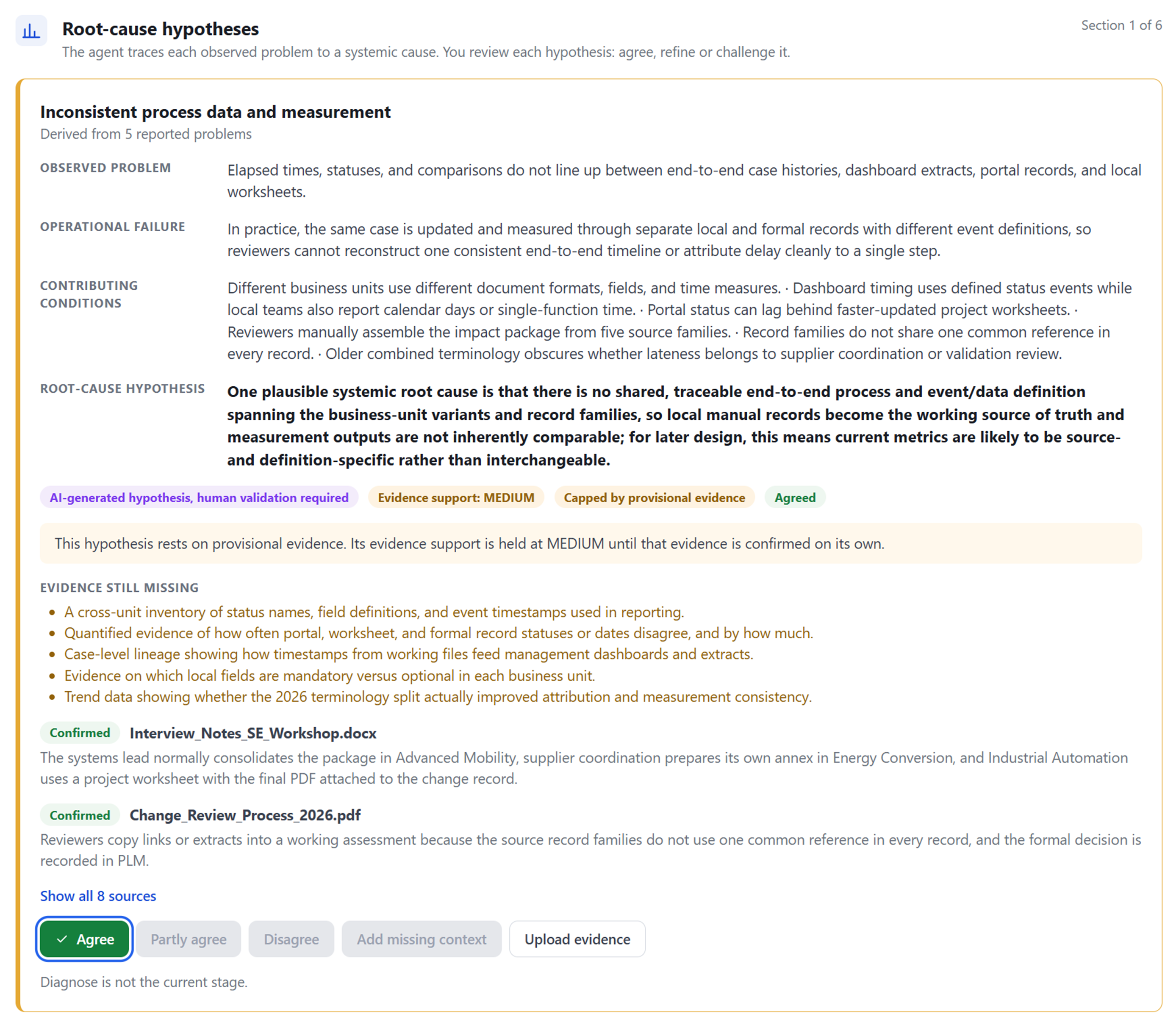 Find the causes worth solving — not just the symptoms.
Every hypothesis shows its evidence, confidence and review status. Unsupported claims remain provisional rather than silently becoming recommendations.
IATI translates the agreed problems and foundation gaps into a target AI architecture: shared data, document, integration and governance foundations first, with reusable AI capabilities built on top. It then evaluates what can realistically be delivered within the company's constraints.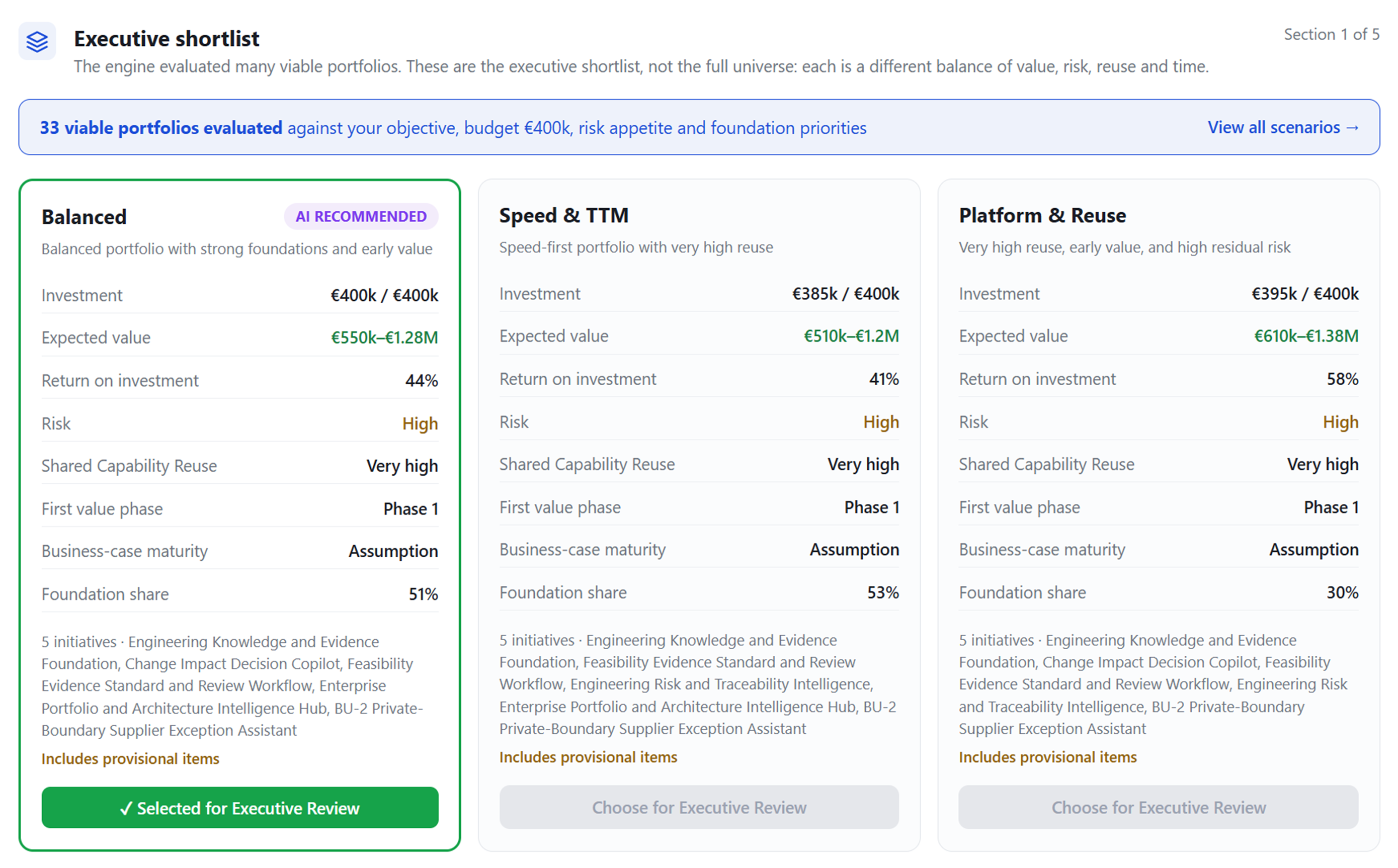 Connect what the company needs to build with what it can actually fund.
A deterministic decision engine applies hard gates, scoring criteria, dependencies, risk models and 24-month financial assumptions. It compares viable portfolios and shows the strongest options under the stated budget.
The AI explains the results, but it does not invent the figures.
The final Executive Decision Brief connects the operational problems, root causes, shared foundations, AI capabilities, expected outcomes, financial case, risks and open conditions.
Stakeholders review the same evidence, record their conditions and resolve disagreements through an explicit decision process.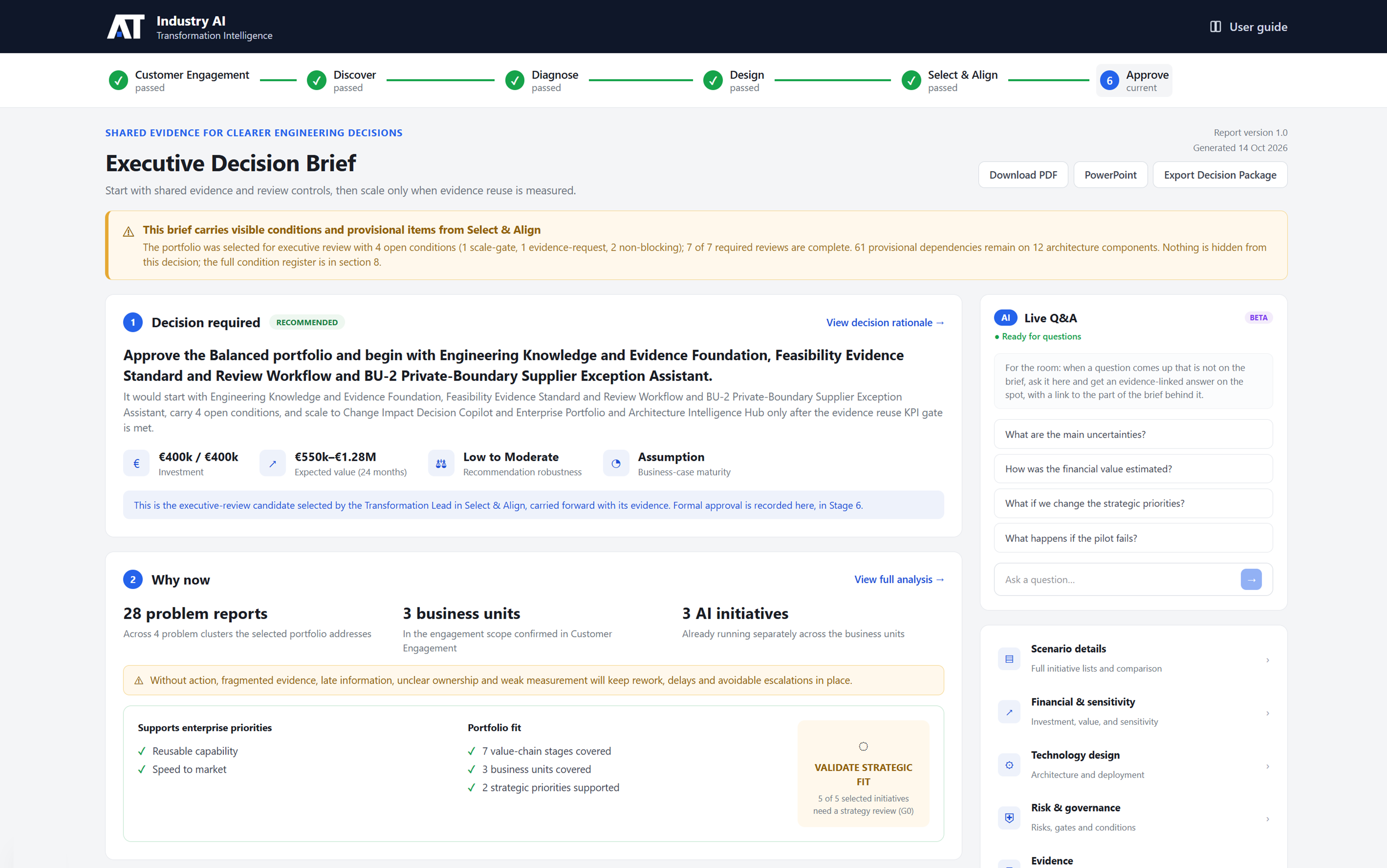 One governed case for the C-suite decision.
Leadership can approve the proposal, modify the portfolio, request more evidence or defer the decision. If something changes, IATI reopens the earliest affected stage instead of restarting the entire engagement.
The final decision, rationale, conditions and evidence lineage are recorded and exportable.
Large transformation programmes often begin with expensive consulting engagements or disconnected AI pilots. Smaller industrial companies may not have the budget or internal capability to establish an evidence-based transformation direction before committing significant resources.
I built IATI to give those companies a structured starting point: a way to investigate their own organisation, improve the analysis with human expertise, test investment scenarios and prepare a defensible case for leadership.
It does not replace management judgment or guarantee that an AI initiative will succeed. It helps a company move from fragmented opinions and isolated AI ideas to a traceable, governed and financially grounded decision.
IATI runs as one stateful LangGraph workflow with human-review interrupts across six stages. Retrieval is scoped to the engagement's own documents through Chroma, while strict schemas and fail-closed validation constrain every model call.
Next.js · React · TypeScript · LangGraph.js · OpenRouter · Chroma · Prisma · SQLite
2,373 automated tests passed across 164 test files
16 of 16 retrieval contract queries found the expected evidence in the top five
Live Q&A answered 4 of 4 supported questions with a valid source
Live Q&A refused 2 of 2 questions not supported by the brief
Tested end to end on one fictional industrial company
All demonstration data is synthetic. The current evaluation is a builder-led validation, not an independent production study.