HOW IT WORKS
Reason Commons sits alongside the work an organization already does — meetings, documents, analysis, messages, decisions, and follow-up. AI continuously turns that activity into a structured model of the reasoning: the goals being pursued, current bottlenecks, claims and evidence, assumptions, predictions, objections, decisions, actions, and observations.
Reason Commons specializes in Open-World Goals: where reality is likely to contradict the original plan. It makes the reasoning currently relied on explicit so that it is precise enough to be contradicted, then uses AI to propose clear updates to the shared reasoning model that humans are in control of.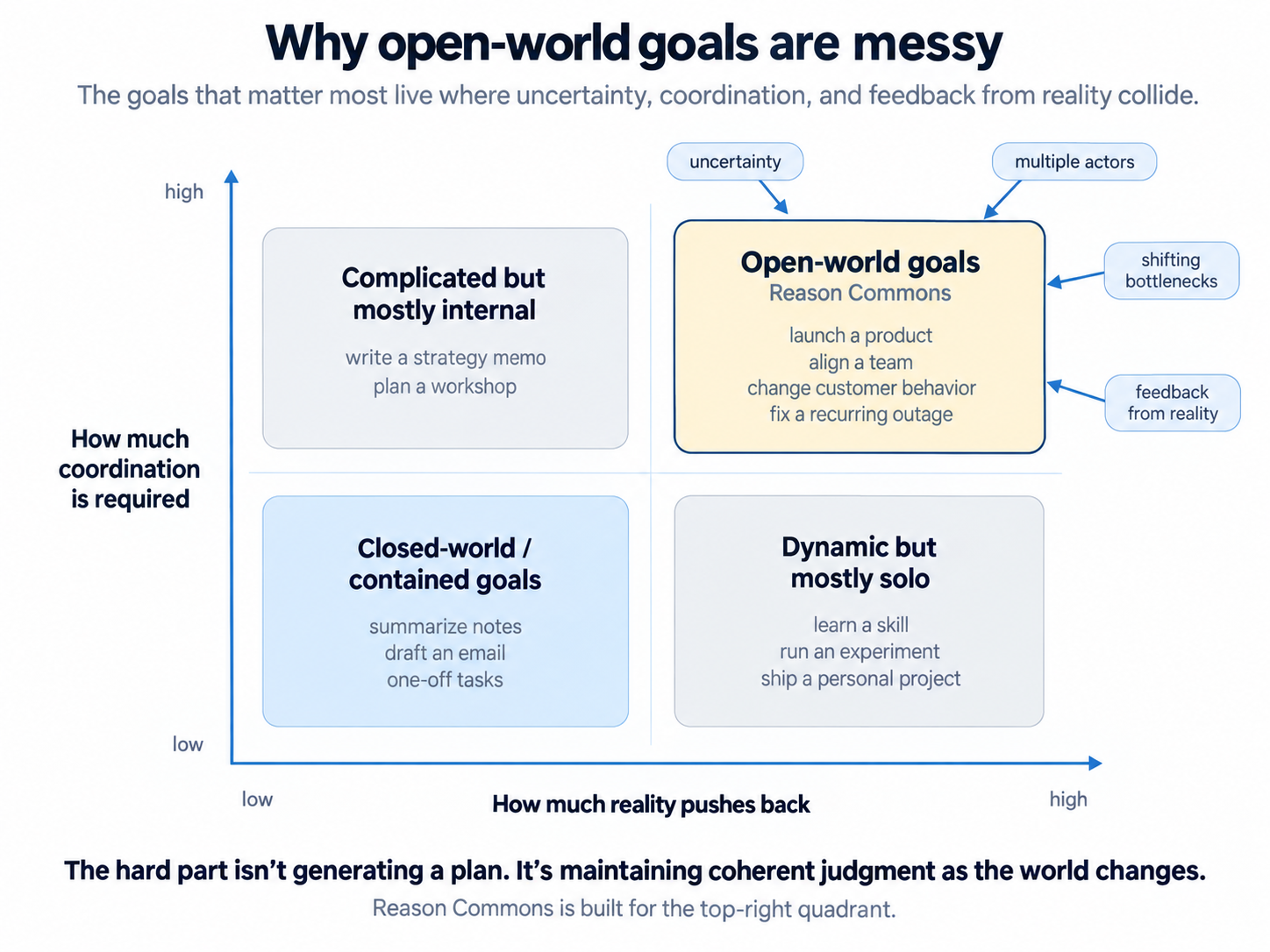
Crucially, the system distinguishes between what AI infers and what people commit to. AI can suggest that “the team appears to believe X because of Y,” but a human must confirm the claims, predictions, decisions, or objections that the organization wants to stand behind. Those commitments are recorded prospectively, with their sources and context.
From there, Reason Commons maintains a living chain:
Goal → bottleneck → evidence → intervention → commitment → action → observation → revision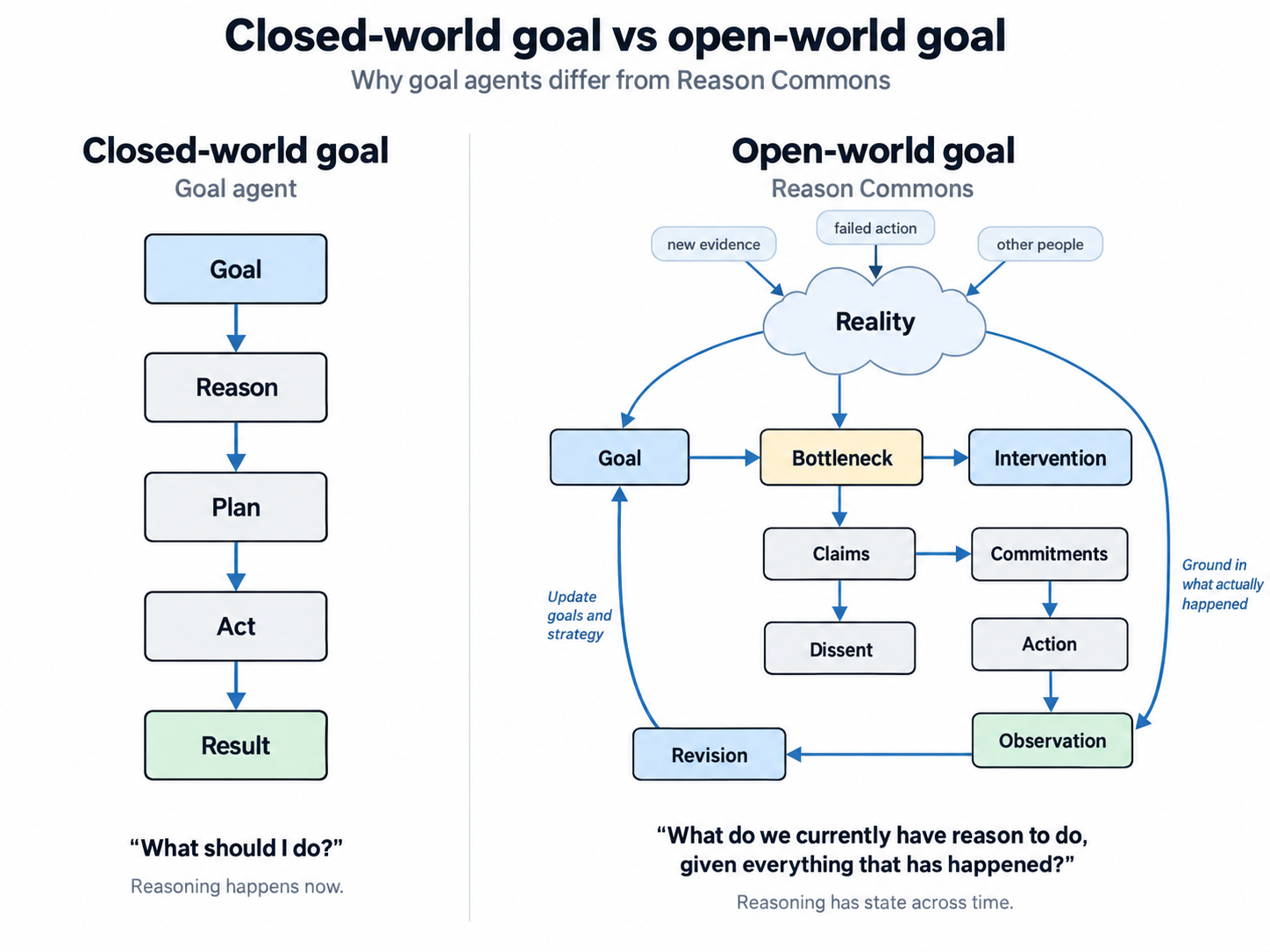
When reality changes, the record changes with it. A prediction can later be compared with what happened. An objection remains attached to the decision it challenged. Execution can be compared with what was actually approved. New evidence can revise an old claim without erasing what the organization believed before.
The result is not just an archive of past reasoning. It is a current institutional position that can be continued from: what we believe now, why we believe it, what remains disputed or uncertain, what we are trying, and what would cause us to change our minds.